Wet Coats, Muddy Boots and £300: Outfitting a Hallway for a Real North East Winter
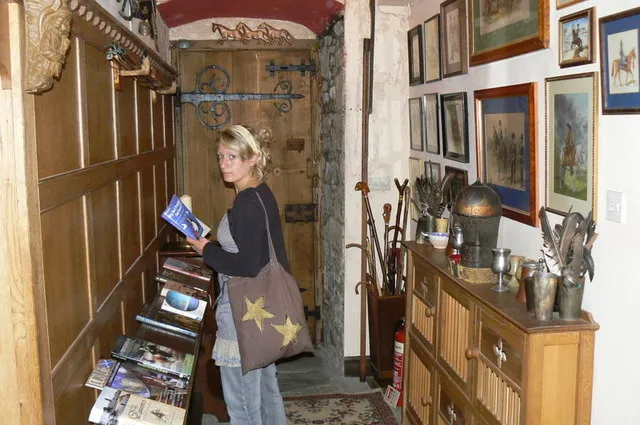
Photo: Malcolm Carruthers, CC BY-SA 2.0, via Wikimedia Commons
There's a particular kind of North East morning where you open the front door, get hit side-on by rain coming off the coast, and spend the next four minutes wrestling a wet coat off a squirming seven-year-old in a space barely wider than a fridge. That's the hallway. Nobody designs it. Nobody budgets for it. And yet from October to March it takes more punishment than the kitchen and living room combined.
Most hallway makeovers online assume you've got a sweeping entrance hall with a chandelier. Plenty of us have a 1.2-metre-wide passage in a 1900s terrace with a radiator, a gas meter box and a front door that swings straight into the shoe pile. So here's a practical, £300-ish plan built from warehouse clearance stock — what to buy, what to walk past, and how to measure before you commit the van.
Start with the floor, because that's where the grit lands
Before you think about furniture, think about what stops a trail of wet grit getting to the stair carpet. Two mats, not one. A stiff coir mat at the door for the worst of it, and a washable runner or small rug a couple of feet in for the rest. The coir does the ugly job; the runner does the pretty job.
Cowes and Tynemouth get salt spray, inland gets road grit, and all of it grinds into fibres. That's why I'd skip anything long-pile or cream. In clearance, look for flatweave polypropylene, cotton runners you can bung in the machine at 30 degrees, or a wool flatweave that's been properly sealed. Expect £15–£25 for a decent coir and £30–£40 for a 60x150cm runner. If the label says 'dry clean only', leave it on the shelf — a hallway rug you're frightened of is a hallway rug you'll never clean.
The bench question
A bench with shoe storage underneath is the single best £70–£90 you'll spend on a hallway. It gives you somewhere to sit and wrestle with laces, and it hides the boots. But clearance benches are where cheap materials go to expose themselves.
Check these in the warehouse, in this order:
- Lift the seat. If the inside is thin MDF with no sealing, it'll swell the first time a wet boot goes in. Go for solid wood frames, powder-coated metal, or sealed MDF.
- Look at the legs. Wobbly benches don't tighten up. They just wobble more.
- Check the height. Under 42cm and most adults are sitting with their knees round their ears.
If you can't find a bench that passes, a low, sturdy shoe cupboard in solid pine or metal does the same job and takes less floor space.
Hooks beat hangers, every time
Coat stands eat floor space you don't have. A simple wall-mounted peg rail or hook plate at roughly 1.7m costs £10–£15 in clearance and holds four or five coats. Powder-coated steel and painted hardwood both shrug off damp. Chrome-plated cheapies go spotty within a winter.
Mount it into a stud or use proper cavity fixings — a wet winter coat plus a bag is roughly 4kg, and a single plasterboard fixing will give up around February. And leave a gap of 30cm between the door frame and the first hook, or coats will stop the door opening.
What I'd walk straight past
- Tall open shoe racks. They look tidy in the shop and turn into a game of Jenga by week two.
- Fabric ottomans. Wet gloves, damp umbrellas, gone.
- Glass-topped consoles. Fine in a showroom, a nightmare with a school bag.
- Anything with a visible raw chipboard edge. That's where water gets in.
- Big statement mirrors you can't actually fix to the wall. In older terraces, hallway walls are often lath and plaster or dot-and-dab. Measure, then buy the right fixing before you buy the mirror.
Measure like you mean it
Before a warehouse trip, take five numbers and put them in your phone notes:
- The narrowest point of the hall — usually between a radiator and the opposite wall. This is your true width.
- The front door swing — draw a quarter circle on the floor with masking tape.
- Height to the underside of the stairs, if the hallway runs under them.
- Distance from the door to the first radiator.
- The skirting depth. Slim consoles often sit proud because of a chunky skirting.
Then tape out the footprint of anything you're considering on the floor at home. Two minutes with a tape and a roll of Frog Tape saves a 40-mile round trip to return a shoe cabinet that doesn't fit past the stair newel.
A worked £300 basket
This is roughly what a sensible clearance run looks like for a standard two-up-two-down hallway:
| Piece | Budget |
|---|---|
| Coir doormat | £18 |
| Washable flatweave runner | £35 |
| Shoe bench or low cupboard | £85 |
| Peg rail / hook plate | £12 |
| Slim shoe cabinet (if no bench storage) | £60 |
| Lidded woven basket for gloves and hats | £14 |
| Small wall mirror | £22 |
| Battery or plug-in wall light | £25 |
| Umbrella stand (or a tall vintage jug) | £15 |
| Total | ~£286 |
That leaves a little for fixings, a cheap hand brush and a tin of matching paint to touch up scuffs on the frame. All of it is the sort of thing that turns up in end-of-line and cancelled-order stock rather than the showroom floor.
The winter upkeep nobody mentions
Clearance pieces last years if you give them ten minutes a month. Shake the coir out weekly and hose it in spring. Machine-wash the runner every fortnight through winter — that's the whole point of buying washable. Wipe down painted metal hooks with a damp cloth to shift salt residue. And keep a small spray bottle of water and white vinegar handy for the muddy paw prints on sealed wood.
One last thing: buy a cheap boot tray. Not glamorous, but a £6 tray under the bench will save you £60 of runner replacement by March. That's the kind of maths a hallway actually understands.
Before you head out
Take a photo of your hallway from the front door. Take the measurements. Take a tape measure, a torch for looking under benches, and a friend who'll tell you honestly that the mirror is too big. Then treat the clearance floor the way you'd treat a good charity shop — patient, unromantic, and willing to walk away.
The hallway doesn't need to be beautiful. It needs to work at 7.40am in February with two wet coats and a dog. Build it for that morning and the nice-looking bit follows.