Anchor the Room: Why the Rug Should Be in the Van Before the Sofa
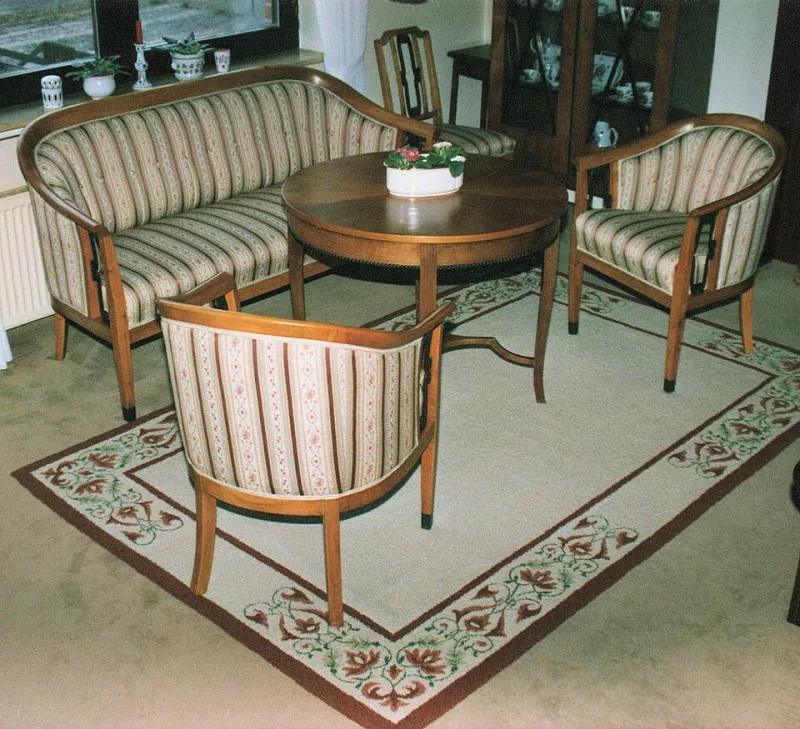
Photo: Kinna2, CC BY-SA 4.0, via Wikimedia Commons
Most of us furnish a living room in the same order: sofa first, then coffee table, then a frantic rug hunt once the room feels cold and echoey. I would like to make the case for flipping that. In a budget room, the rug should often come before the sofa. Not because rugs are more important than somewhere to sit — they are not — but because a rug is the cheapest way to set the colour, scale and mood of everything that follows.
This is especially true in North East homes. A lot of us are working with Victorian terraces, ex-council semis, bay windows, narrow halls and living rooms that have to do several jobs at once. A clearance rug can anchor a seating area, hide a tired floor and give a rented flat a bit of personality without touching a paintbrush. It is also the item most likely to be reduced at the end of a season, which makes it a very good first buy.
The case for buying the rug first
A sofa is a big, expensive commitment. A rug is a colour brief. Once you have the rug, you know whether the room is going calm and oat-coloured, warm and rusty, or bold and blue. You can then buy a sofa that supports it rather than fighting it.
The other practical argument is choice. There are hundreds of neutral sofas in the world and far fewer rugs in exactly the right shade. If you fall for an end-of-line rug in a warehouse, buy it. You can almost always find a charcoal, oatmeal or navy sofa to go with it. The reverse is not true: buy the sofa first and you may spend months trying to match a colour that has already sold out.
A step-by-step order for a North East living room
- Measure the room and the route in. Write down the widest rug that will still leave floor around the edges. Measure your doorway, hall bend and stairwell too. A rug that will not go up the stairs is a very expensive doormat.
- Decide what the rug has to do. Is it anchoring a sofa and two chairs? Hiding a worn carpet? Making a rented lounge feel less beige? That job tells you the size and the level of pattern.
- Shop the rug first. Take a paint colour card, a cushion from your sofa if you have one, and photos of the room in daylight. Unroll it on the warehouse floor if staff allow, and stand back. Check the backing and edges.
- Choose the sofa to support it. If the rug is patterned, go plain on the sofa. If the rug is a strong colour, keep the sofa neutral. If the rug is pale, think hard about muddy boots and pets.
- Add the cheap layers last: cushions, a throw, a lamp, a second-hand coffee table. These are the things you can change without wincing.
- Live with it for a week before buying more. Clearance shopping rewards patience as much as speed.
The sizing mistake that makes a room look smaller
A tiny rug floating in the middle of the floor makes a room look mean. It also makes a sofa look like it is hovering. As a rule, the front legs of the sofa and chairs should sit on the rug, with the back legs off. In a larger room, put all the legs on. In a narrow North East terrace, the front-legs-on arrangement can make a huge difference without swallowing the floor.
If you are unsure, mark the rug size on the floor with masking tape before you commit. Stand inside the tape. Does it feel like a zone or a postage stamp? That ten-minute test is free, and it is much easier than returning a rug you bought in a hurry.
When the perfect rug is an odd size
Odd sizes are where clearance gets interesting. A long runner can go along a hallway or behind a sofa. A small rug can become a reading nook rug beside a chair. A square rug can work under a round table or in a bay window. If a rug is slightly too small for the main seating area, layer it over a larger, cheap neutral rug or carpet — but keep the edges tidy and use anti-slip grip underneath.
Do not cut a rug unless it is designed to be cut and you can get the edges bound professionally. A raw edge will fray and look scruffy within weeks. If the size is wrong and the price is not exceptional, leave it.
When the colour is end-of-line
End-of-line colours are not a problem; they are the discount. The trick is to repeat the colour rather than match it. If you find a rusty orange rug, keep the sofa and walls calm and pull the orange into a cushion, a book spine or a print. If the rug is a muddy green you are unsure about, take a photo in daylight and hold your paint card against it. Warehouse lighting lies.
If the rug clashes with a sofa you already own, use a plain throw or slipcover to quieten the sofa, and let the rug be the loud one. A room looks expensive when things relate to each other, not when they all cost a lot. Buy the rug first, let it set the rules, and spend the rest of the budget on things that support it. In 2026, that is one of the simplest ways to make a clearance room look anything but clearance.